



What To Do When The Hyundai Slip Indicator Light Comes On
Modern Hyundai vehicles are equipped with a suite of electronic safety systems designed to keep you in control under demanding driving conditions. The slip indicator light, which typically displays as a car with wavy lines beneath it, is part of the Vehicle Stability Control (VSC) and Traction Control System (TCS). When the Hyundai slip indicator light comes on, it is worth understanding exactly what that means and how to respond appropriately.
What The Light Means When It Flashes
A flashing slip indicator light is generally a normal response. It means your traction control or stability system has detected wheel slip and is actively intervening to correct it. This commonly happens during hard acceleration on wet roads, when pulling away on loose gravel, or when navigating a sharp turn at speed. The system momentarily reduces engine power or applies braking to individual wheels to restore traction, and in this scenario, the light is doing exactly what it is supposed to do. The brief flicker of the light during slippery conditions is actually a reassuring sign that the system is engaged and functioning, rather than a reason for concern. Drivers who are unfamiliar with how traction control works sometimes misread this normal intervention as a warning of a mechanical problem.
What It Means When It Stays On Solid
A slip indicator light that remains on continuously rather than flashing tells a different story. A steady light typically means the traction control or stability control system has been turned off, either manually by the driver using the VSC/TCS button, or due to a fault the system has detected within itself. If you did not intentionally disable the system, a steady light is a signal to investigate further. Some drivers accidentally press the traction control button when reaching for nearby controls, particularly in unfamiliar vehicles or after adjustments to the center console area. Before assuming a fault, take a moment to confirm that the system was not disabled unintentionally during a recent trip.
Check Whether The System Was Manually Disabled
Many Hyundai models include a button that allows the driver to temporarily disable traction control, which is useful in specific situations like rocking out of mud or snow. If you or another driver pressed this button, the slip indicator light will stay on until the system is re-engaged, and simply pressing the button again will reactivate it and extinguish the light. It is worth checking whether anyone else who regularly drives the vehicle may have disabled the system without mentioning it. In some Hyundai models, the traction control system will automatically re-enable itself the next time the vehicle is started, while in others it remains off until manually reactivated.
When A Fault Code Is Involved
If the light remains on after confirming the system has not been manually disabled, the vehicle's onboard computer has likely stored a fault code. Common triggers include a faulty wheel speed sensor, an issue with the steering angle sensor, or a problem within the ABS module, since traction control and stability control share hardware with the antilock braking system. A professional scan is needed to identify the specific fault. Wheel speed sensors are particularly vulnerable to damage from road debris, moisture, and corrosion over time, and a sensor that is sending inconsistent readings will cause the stability control system to behave erratically or disable itself as a precaution.
At Lakeland Hyundai, our service team is experienced in diagnosing and repairing all electronic safety system faults using genuine Hyundai parts and the latest diagnostic technology. We also offer our Owner Advantage Program, providing exclusive ongoing benefits to our customers.
Schedule a service appointment with us today and drive with the confidence your Hyundai was designed to deliver.
Lakeland Hyundai
Address
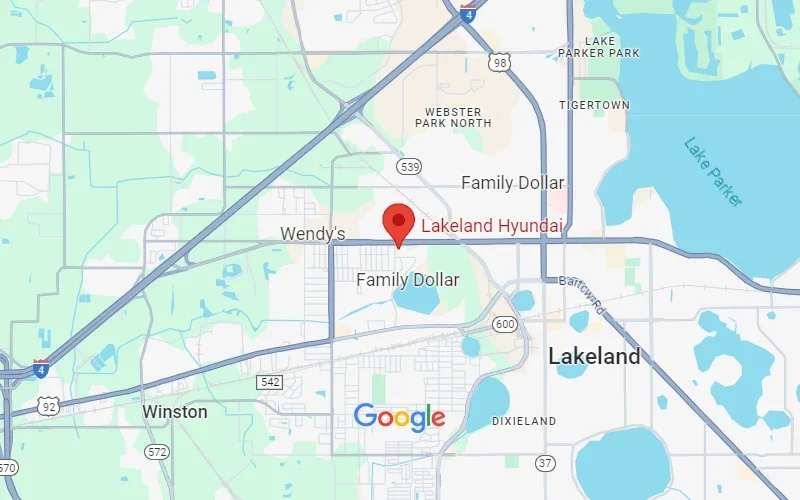
1500 West Memorial Blvd
Lakeland, FL 33815
Phone
- Sales 863-583-9200
- Service 863-583-9242
- Parts 863-686-5126
| Monday | 9:00AM - 8:00PM |
| Tuesday | 9:00AM - 8:00PM |
| Wednesday | 9:00AM - 8:00PM |
| Thursday | 9:00AM - 8:00PM |
| Friday | 9:00AM - 8:00PM |
| Saturday | 9:00AM - 8:00PM |
| Sunday | 12:00PM - 6:00PM |
| Monday | 7:30AM - 6:00PM |
| Tuesday | 7:30AM - 6:00PM |
| Wednesday | 7:30AM - 6:00PM |
| Thursday | 7:30AM - 6:00PM |
| Friday | 7:30AM - 6:00PM |
| Saturday | 8:00AM - 4:00PM |
| Sunday | Closed |
| Monday | 7:30AM - 6:00PM |
| Tuesday | 7:30AM - 6:00PM |
| Wednesday | 7:30AM - 6:00PM |
| Thursday | 7:30AM - 6:00PM |
| Friday | 7:30AM - 6:00PM |
| Saturday | 8:00AM - 4:00PM |
| Sunday | Closed |