



How To Identify A Failing Hyundai Starter Motor
Few things are more frustrating than getting into your Hyundai, turning the key or pressing the start button, and nothing happens as expected. While a dead battery is the most commonly blamed culprit in these situations, a failing Hyundai starter motor is just as capable of leaving you stranded, and it tends to give warning signs before it fails. Learning to recognize those signs early allows you to address the problem on your own schedule rather than the side of a road.
The Role Of The Starter Motor
The starter motor is an electric motor that cranks the engine when you initiate ignition. It draws power from the battery, engages a small gear called a pinion with the engine's flywheel, and rotates the engine fast enough to begin the combustion cycle. Once the engine fires and runs on its own, the starter disengages, and it is a brief but mechanically demanding task, with the components involved wearing down over time. The starter motor operates under considerable electrical load each time it is used, drawing significantly more current than most other components in the vehicle.
Clicking Sounds Without Engine Cranking
One of the most recognizable symptoms of a starter problem is a single loud click or a rapid series of clicks when you try to start the vehicle, with the engine not cranking at all. A single solid click often points to the starter solenoid failing to engage properly, while rapid clicking more commonly suggests insufficient power reaching the starter. When the battery test is healthy and rapid clicking persists, the starter itself becomes the primary suspect. The solenoid is the electromagnetic switch that engages the starter motor and the pinion gear simultaneously, and when it begins to fail, it may produce that single unresponsive click without completing the circuit.
Slow Or Labored Cranking
If your Hyundai is cranking but doing so sluggishly, almost as if the engine is struggling to turn over, the starter motor may be drawing too much current due to worn internal components. This symptom is particularly worth noting when it occurs consistently across multiple start attempts and cannot be attributed to cold weather or a battery that is getting old. A starter that is drawing excessive current will also place additional strain on the battery and the charging system over time, potentially shortening the life of those components as well. Having the starter's current draw tested using an ammeter during a cranking test is a reliable way to determine whether it is operating within its specified range.
Intermittent Starting Problems
A starter motor that is beginning to fail does not always fail in the same way twice. You might start the vehicle with no issue in the morning, then encounter a no-start situation in the afternoon. This inconsistency happens because internal components, particularly the brushes and armature, can make good contact in some positions and poor contact in others. Intermittent starting issues that cannot be traced to the battery or ignition system deserve closer inspection. The unpredictable nature of intermittent starter failure makes it one of the more frustrating problems to diagnose, since the vehicle may start perfectly when brought in for inspection, and the fault may not be immediately reproducible.
At Lakeland Hyundai, our expert service team can accurately diagnose starter motor issues and get your vehicle starting reliably again. We are proud to have earned the 2025 Hyundai Board of Excellence Award, a recognition of our commitment to service quality and customer satisfaction. Call or book online to schedule your service visit, and we will take it from there.
Lakeland Hyundai
Address
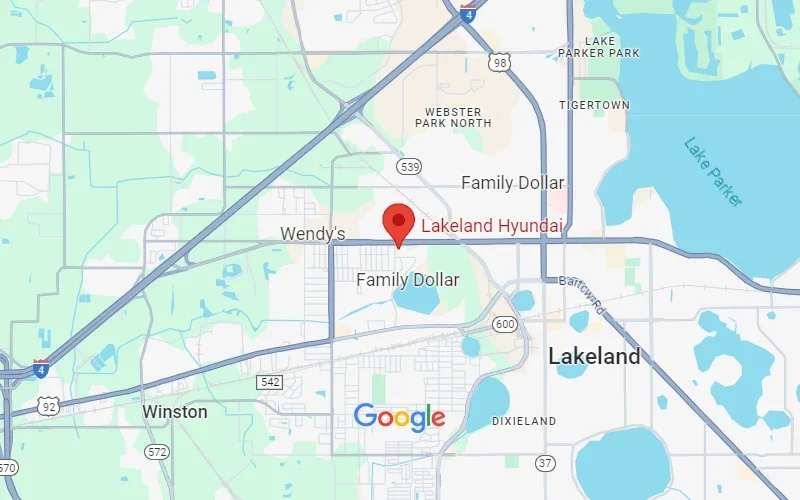
1500 West Memorial Blvd
Lakeland, FL 33815
Phone
- Sales 863-583-9200
- Service 863-583-9242
- Parts 863-686-5126
| Monday | 9:00AM - 8:00PM |
| Tuesday | 9:00AM - 8:00PM |
| Wednesday | 9:00AM - 8:00PM |
| Thursday | 9:00AM - 8:00PM |
| Friday | 9:00AM - 8:00PM |
| Saturday | 9:00AM - 8:00PM |
| Sunday | 12:00PM - 6:00PM |
| Monday | 7:30AM - 6:00PM |
| Tuesday | 7:30AM - 6:00PM |
| Wednesday | 7:30AM - 6:00PM |
| Thursday | 7:30AM - 6:00PM |
| Friday | 7:30AM - 6:00PM |
| Saturday | 8:00AM - 4:00PM |
| Sunday | Closed |
| Monday | 7:30AM - 6:00PM |
| Tuesday | 7:30AM - 6:00PM |
| Wednesday | 7:30AM - 6:00PM |
| Thursday | 7:30AM - 6:00PM |
| Friday | 7:30AM - 6:00PM |
| Saturday | 8:00AM - 4:00PM |
| Sunday | Closed |