



How To Fix A Hyundai Overheating Problem
An overheating engine is one of the most urgent problems your Hyundai can develop, and how you respond to it in the first few minutes makes a significant difference in how much damage occurs. While the previous article covered how to recognize the warning signs, this guide focuses on what comes next: how to address the underlying causes and get your cooling system back to full working order.
Start By Letting The Engine Cool Completely
Before inspecting or touching anything in the engine bay, the vehicle must be fully cooled. This means waiting at least 30 minutes after the engine has been switched off, and longer if the overheating was severe. The cooling system operates under pressure when hot, and attempting to open the coolant reservoir cap or remove any hoses while the system is pressurized can result in serious burns from escaping steam and fluid. Once the engine is cold to the touch, it is safe to begin a visual inspection. Placing a thick cloth over the reservoir cap before opening it adds a layer of protection, even on a cold engine, as a precaution against any residual pressure.
Check The Coolant Level And Condition
With the engine cold, remove the coolant reservoir cap and check the fluid level against the MIN and MAX markers on the side of the reservoir. A level that is significantly below the minimum line indicates that coolant has been lost, either through an external leak or an internal one, such as a blown head gasket. Top up the level with the correct Hyundai-specified coolant mixed at the appropriate ratio, but understand that topping up is a temporary measure rather than a fix if the underlying leak has not been identified. Also, take note of the coolant's appearance. Healthy coolant is typically a clean pink, green, or blue color, depending on the type, and it should be transparent enough to see through.
Inspect For External Leaks
With the engine cold, look carefully around all visible cooling system components for signs of dried coolant residue, which often appears as a crusty white or orange deposit. Check along the radiator hoses, at the hose clamps, around the water pump, and at the base of the radiator itself. A pinhole leak in a hose may not drip when the system is cold and depressurized, but will seep under the heat and pressure of normal operation. Pay particular attention to the lower radiator hose, which runs along the bottom of the engine bay and is more exposed to road debris that can cause abrasion damage over time. The radiator itself should be inspected for physical damage, bent fins, and signs of corrosion around the tanks at either end.
Evaluate The Thermostat And Water Pump
If the coolant level is correct and no external leaks are visible, the thermostat and water pump become the next logical areas to investigate. The thermostat regulates coolant flow between the engine and the radiator, and when it fails in the closed position, it prevents coolant from circulating to the radiator for cooling. A failed thermostat is a relatively inexpensive part, but the labor involved in accessing it varies depending on the engine layout of your specific Hyundai model. The water pump is the mechanical heart of the cooling system, and when its impeller wears down or its bearing fails, coolant circulation is reduced or stops entirely.
Drivers throughout the Lakeland area trust our service department to handle cooling system repairs with the precision and transparency they deserve. Our factory-trained technicians at Lakeland Hyundai use genuine parts and the latest diagnostic technology to identify and resolve overheating problems correctly the first time.
Schedule your service appointment today and protect your engine from the kind of damage that no driver wants to deal with.
Lakeland Hyundai
Address
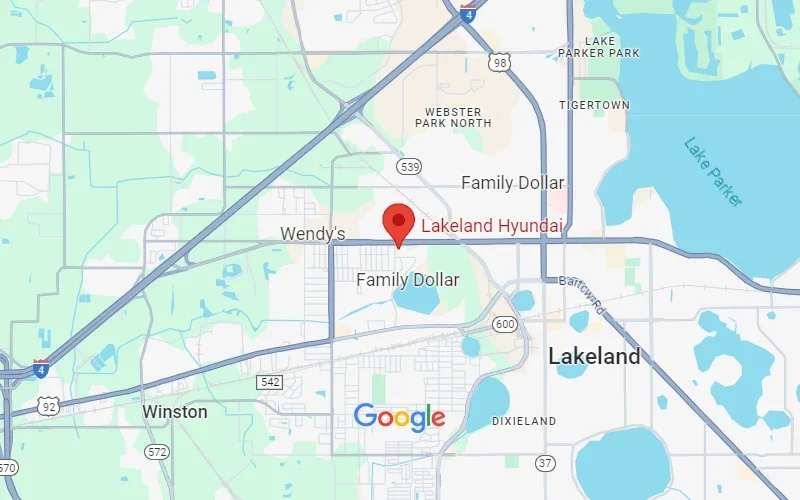
1500 West Memorial Blvd
Lakeland, FL 33815
Phone
- Sales 863-583-9200
- Service 863-583-9242
- Parts 863-686-5126
| Monday | 9:00AM - 8:00PM |
| Tuesday | 9:00AM - 8:00PM |
| Wednesday | 9:00AM - 8:00PM |
| Thursday | 9:00AM - 8:00PM |
| Friday | 9:00AM - 8:00PM |
| Saturday | 9:00AM - 8:00PM |
| Sunday | 12:00PM - 6:00PM |
| Monday | 7:30AM - 6:00PM |
| Tuesday | 7:30AM - 6:00PM |
| Wednesday | 7:30AM - 6:00PM |
| Thursday | 7:30AM - 6:00PM |
| Friday | 7:30AM - 6:00PM |
| Saturday | 8:00AM - 4:00PM |
| Sunday | Closed |
| Monday | 7:30AM - 6:00PM |
| Tuesday | 7:30AM - 6:00PM |
| Wednesday | 7:30AM - 6:00PM |
| Thursday | 7:30AM - 6:00PM |
| Friday | 7:30AM - 6:00PM |
| Saturday | 8:00AM - 4:00PM |
| Sunday | Closed |